
What Are the Most Commonly Used Lime Kiln Production Lines in the Market? Choose the Best Lime Calcination Solution for You
Lime is an essential industrial raw material and is widely used in construction, metallurgy, chemicals, environmental protection, and many other industries. The lime kiln production line is the core of lime production. Its type directly affects product quality, output, energy consumption, operating cost, and environmental performance. This article reviews the most commonly used lime kiln production lines on the market and provides practical guidance for choosing the right lime calcination solution.
1. Shaft Kiln Lime Production Line
Features:Simple structure, low investment cost, easy operation and maintenance, and short construction period.
Applicable scenarios: Small and medium-sized lime producers with moderate requirements for lime quality and output, or projects with limited investment budgets.
Representative kiln types: Mixed-feed shaft kiln, sleeve shaft kiln, beam shaft kiln, and other mechanized shaft kilns.
Shaft kilns are often the most accessible entry point for new or small-scale lime producers. They require relatively little capital and can be put into operation quickly. However, product quality and process stability depend heavily on kiln design, automation level, and operational control. For basic construction, ordinary desulfurization, and general building materials, a well-designed shaft kiln line can be a practical choice.
2. Rotary Kiln Lime Production Line
Features: High automation, large single-line output, stable lime quality, strong raw material adaptability, and flexible fuel selection.
Applicable scenarios: Large and medium-sized lime enterprises with high requirements for output, continuous operation, and raw material flexibility; especially suitable for projects that need to process fine-grained limestone or complex raw materials.
Rotary kilns are widely used in large-scale lime production because they can achieve high capacity and consistent product quality. They are also more tolerant of variations in limestone particle size and fuel type. The main trade-offs are higher heat consumption and relatively large investment. For large mining groups, integrated industrial bases, and projects with long-term stable demand, a rotary kiln line can be a reliable choice.
3. Regenerative Shaft Kiln Lime Production Line
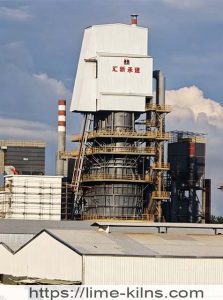
Features: High thermal efficiency, low energy consumption, excellent environmental performance, and high lime activity.
Applicable scenarios: Enterprises with high requirements for lime quality and environmental protection, as well as sufficient investment capacity and long-term stable operation.
Regenerative shaft kilns are known for their excellent energy performance and high product quality. By recovering heat between kiln shafts, they significantly reduce fuel consumption and improve lime activity. They are particularly suitable for high-end applications such as steelmaking, calcium carbide, and fine chemicals. Although the initial investment is higher, the lower fuel consumption and stable product quality can bring long-term economic benefits under full-load operation.
4. Other Types of Lime Production Lines
These kiln types are usually selected for special raw materials or niche product requirements. They should be evaluated carefully based on technical maturity, fuel conditions, product market, and operational capability.
Key Factors to Consider When Choosing a Lime Kiln Production Line
Raw material conditions: Chemical composition, particle size, moisture content, and impurities of limestone. Fine-grained or low-grade materials may require rotary kilns or other special kiln types.
Product requirements: Lime activity, particle size, residual CO₂, and intended application. High-end applications usually require higher activity and more stable quality.
Investment budget: Investment costs vary significantly among kiln types. A suitable solution should balance initial investment with long-term operating costs.
Fuel and energy conditions: Fuel type, price, and availability are critical to profitability. Gas fuels, coal, and low-calorific-value gases may favor different kiln designs.
Environmental requirements: Choose kiln types and flue gas treatment systems that meet local emission standards and environmental regulations.
Automation and operation capability: Higher automation can improve stability and reduce labor costs, but also requires stronger technical management.
After-sales and technical support: Reliable equipment suppliers and experienced technical teams are important for long-term stable operation.
Conclusion
There is no single “best” lime kiln production line for every project. The right choice depends on a comprehensive comparison of raw material conditions, product requirements, investment budget, fuel supply, environmental standards, and operational capability. Small and medium-sized enterprises with limited budgets may start with a shaft kiln line, while large-scale projects with high quality requirements may benefit from a rotary kiln or regenerative shaft kiln. For high-activity and energy-saving applications, a regenerative shaft kiln is often a strong candidate.
Practical Recommendations
Before selecting a lime kiln production line, consult professional lime kiln equipment suppliers for detailed technical solutions and quotations. Visit operating production lines of similar scale and product type to understand actual performance, energy consumption, and maintenance requirements. Keep up with the latest trends in energy efficiency, automation, and environmental protection, and choose a technologically advanced, reliable, and cost-effective lime calcination solution.